
For auto parts wholesalers and importers, the “cheapest” fuel pump is often the most expensive one—once you factor in high return rates, damaged reputation, and shipping costs for RMAs.
In the competitive passenger car aftermarket, distinguishing between a “look-alike” part and a true OE-performance replacement requires looking beneath the surface. Here are the five critical metrics our engineering team uses to ensure every electric fuel pump meets global standards.
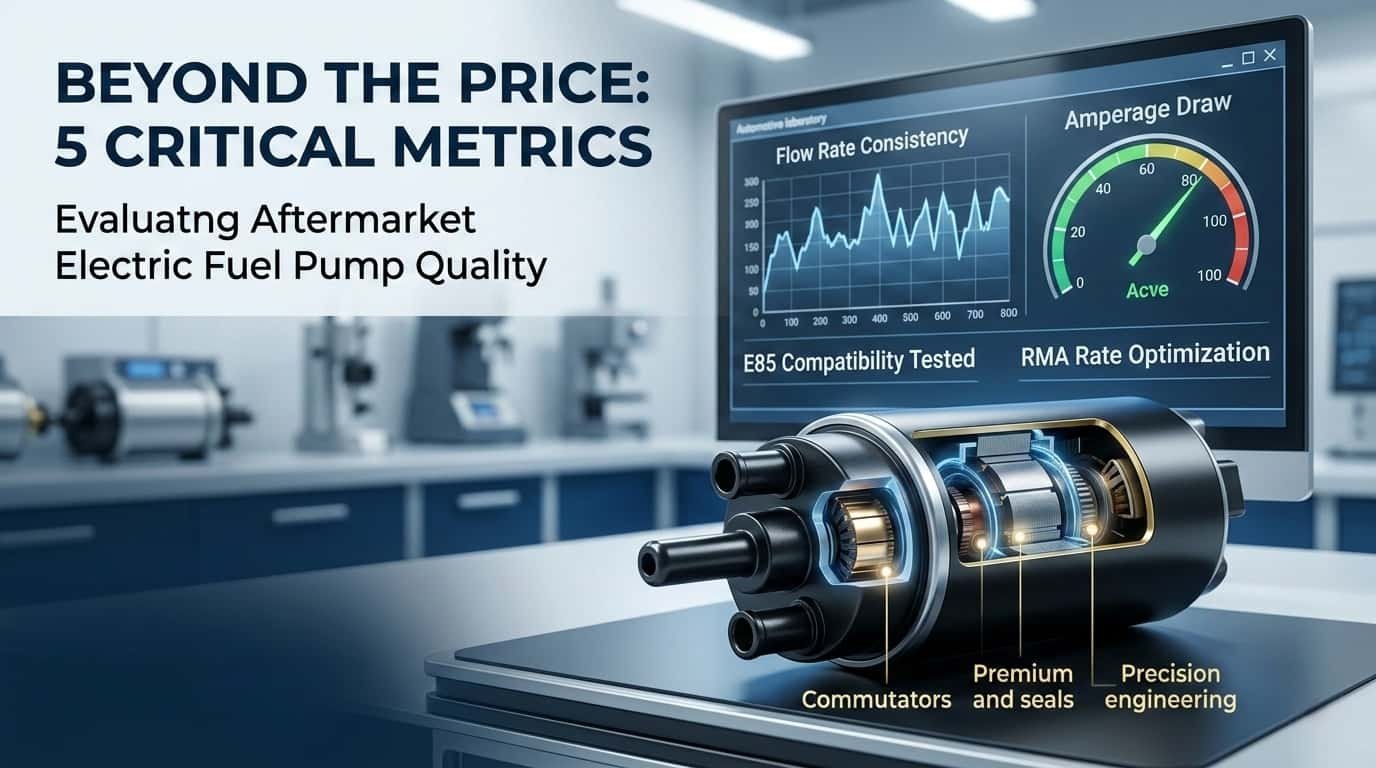
Flow Rate Consistency Under Load
A fuel pump might work perfectly on a bench test, but how does it perform under engine load? High-quality electric fuel pumps must maintain a stable flow rate even as fuel pressure increases.
The Pro Metric: Look for pumps that show less than a 5% variance in flow rate across their operational temperature range. Inconsistent flow leads to lean engine conditions and those dreaded “Check Engine” lights for your customers.
Commutator and Carbon Brush Material
The internal motor is the soul of the pump. Many low-cost manufacturers use copper-only commutators which wear out quickly under the friction of high-speed rotation.
The Quality Benchmark: Premium aftermarket pumps utilize carbon-impregnated commutators or high-grade carbon brushes. This significantly reduces electrical erosion and extends the pump’s lifespan by up to 30% compared to standard copper versions.
Resistance to Modern Fuel Blends (Ethanol Compatibility)
Today’s passenger cars frequently run on E10, E15, or even E85 ethanol blends. Ethanol is corrosive and can swell inferior rubber seals or degrade internal plastics.
B2B Insight: Ensure your supplier uses Viton (FKM) seals and high-density polymers. This prevents internal leaks and ensures the pump survives in markets with diverse fuel qualities.
Amperage Draw: The Silent Killer
An often overlooked technical spec is the “Amperage Draw.” If a pump requires too much current to maintain pressure, it indicates internal friction or a poorly wound armature. This extra heat will eventually burn out the pump or damage the vehicle’s wiring harness.
Technical Tip: A high-quality electric fuel pump should have a steady, low amperage draw. If the draw is too high, it’s a red flag for poor manufacturing tolerances.
Advanced End-of-Line (EOL) Testing
Quality isn’t checked; it’s built. For a B2B partner, you need to know that 100% of the units have been tested—not just a random sample.
At our facility, we implement a multi-stage testing protocol:
Leak Testing: Ensuring housing integrity.
Durability Cycling: Simulating 100,000+ miles of driving.
Why "Good Enough" Isn't Good Enough for Your Business
As a professional in the automotive supply chain, your goal is to provide parts that “Install and Forget.” When you source passenger car fuel pumps that meet these rigorous technical standards, you are investing in:
Lower RMA Rates: Protecting your profit margins.
Customer Loyalty: Mechanics trust brands that don’t fail.
Brand Authority: Position yourself as a premium supplier in your local market.
Speak to a Specialist for Bulk Specifications
Want to see how our pumps compare to OE specs? Contact us now!
Frequently Asked Questions (FAQ)
The material of the commutator and carbon brushes. Premium pumps use carbon-impregnated or high-grade carbon materials to reduce friction and heat.
No. Only pumps equipped with Viton (FKM) seals and high-density polymers are fully resistant to the corrosive nature of ethanol-blended fuels.
A high amperage draw indicates internal friction or poor manufacturing, which leads to overheating and potential damage to the vehicle's electrical system.